A picture of a painted portrait of King Charles the First looking to the right enclosed by a fancy oval golden border. Clicking this image will bring you to the home page. About the ShrineKing Charles the MartyrDevotional ImagesResourcesOther Royal SaintsWebrings &c.
A fancy floral divider

ROYAL MARTYR DEVOTIONAL IMAGES
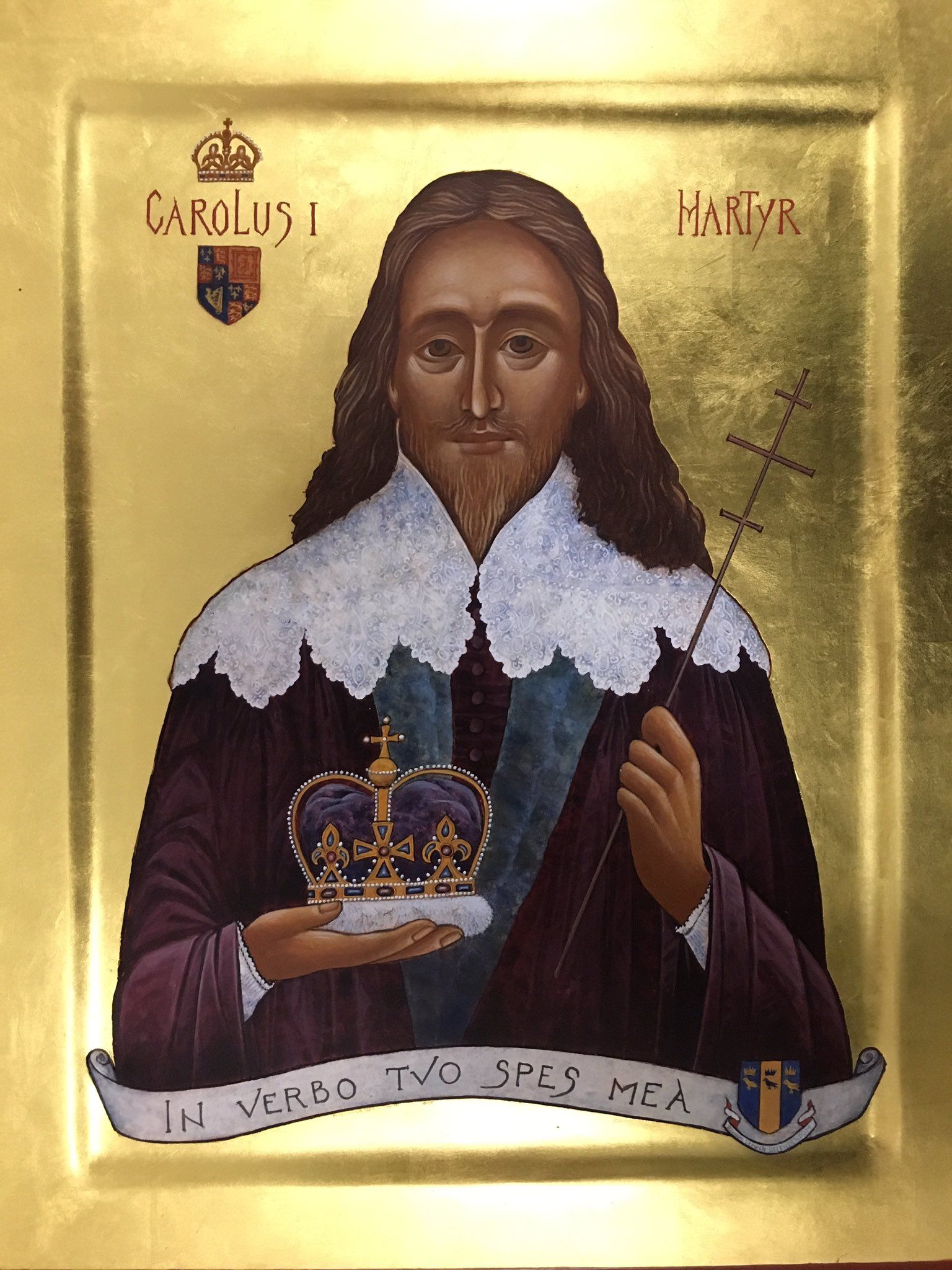
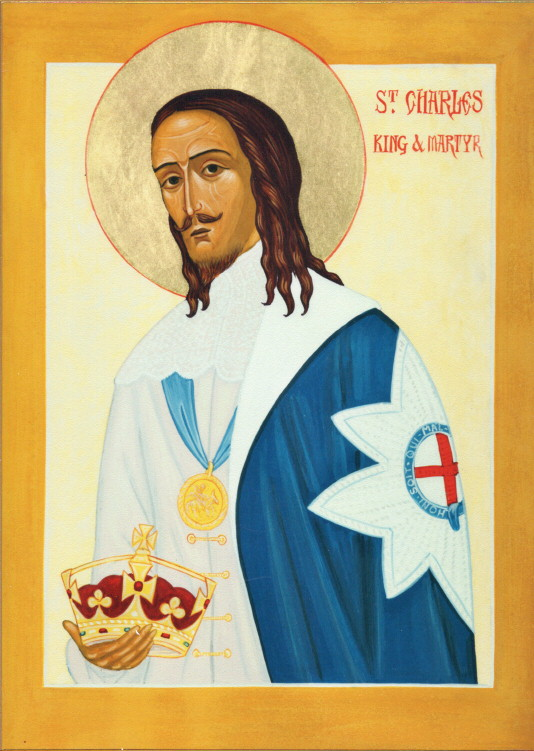
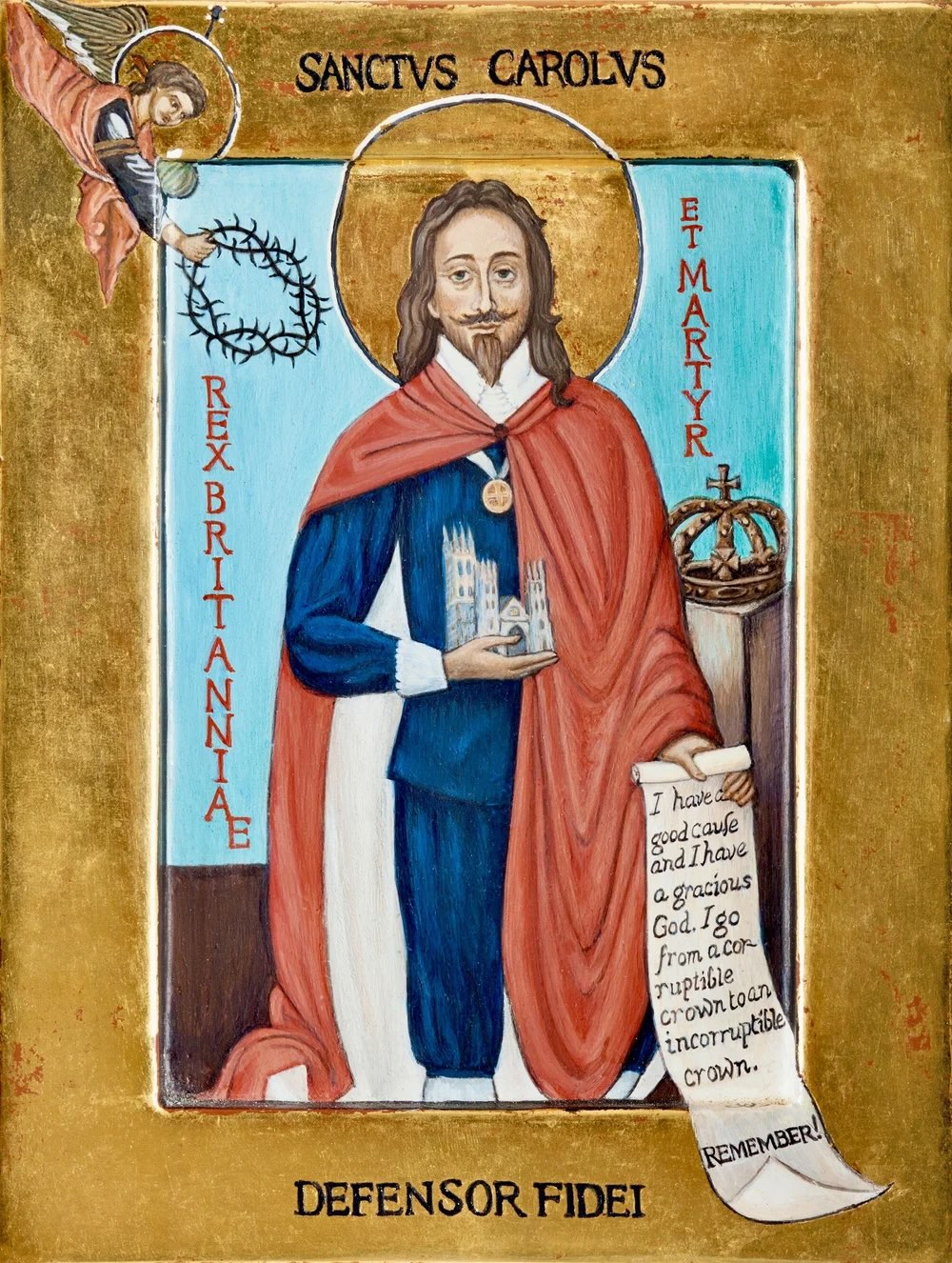
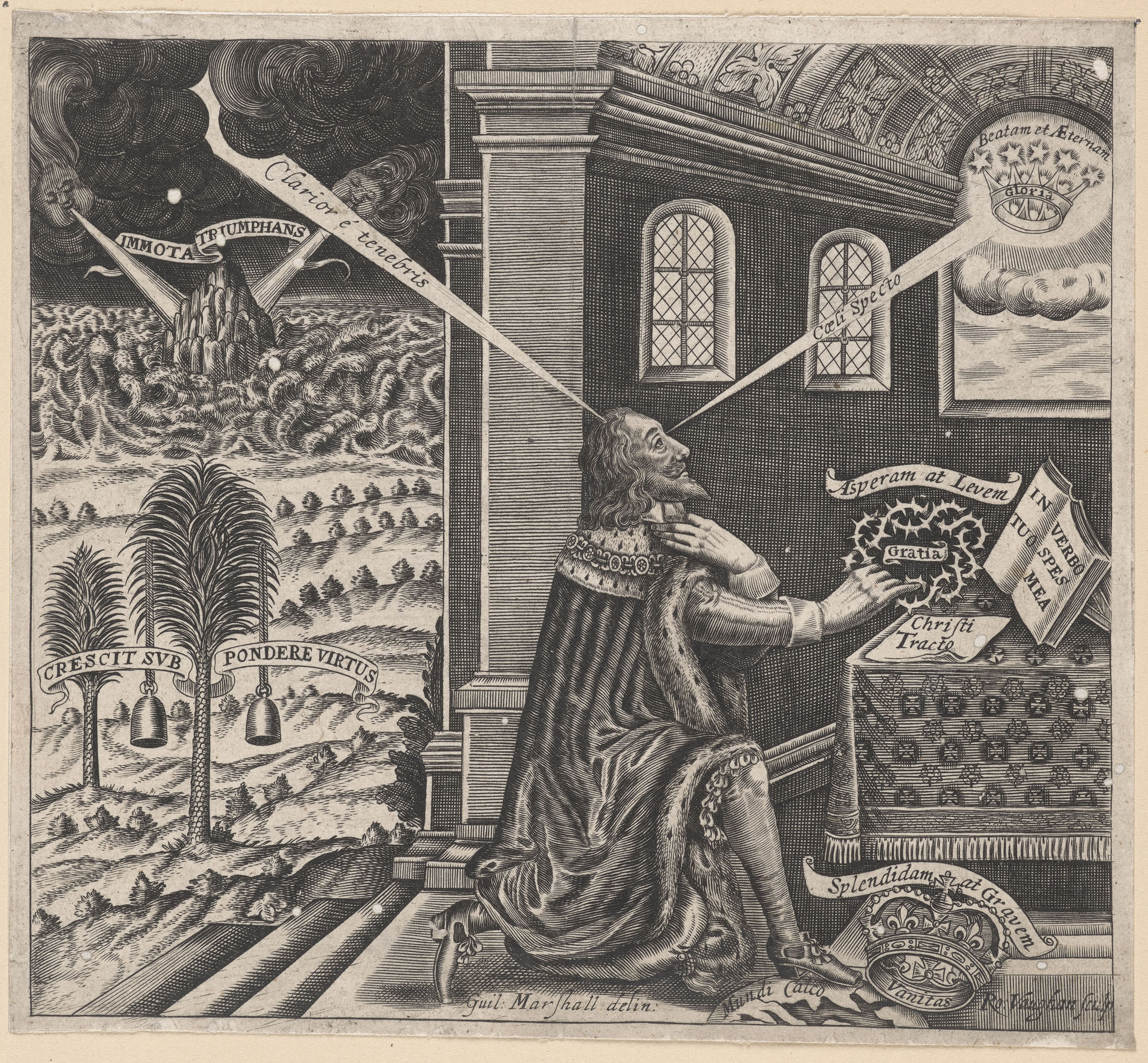
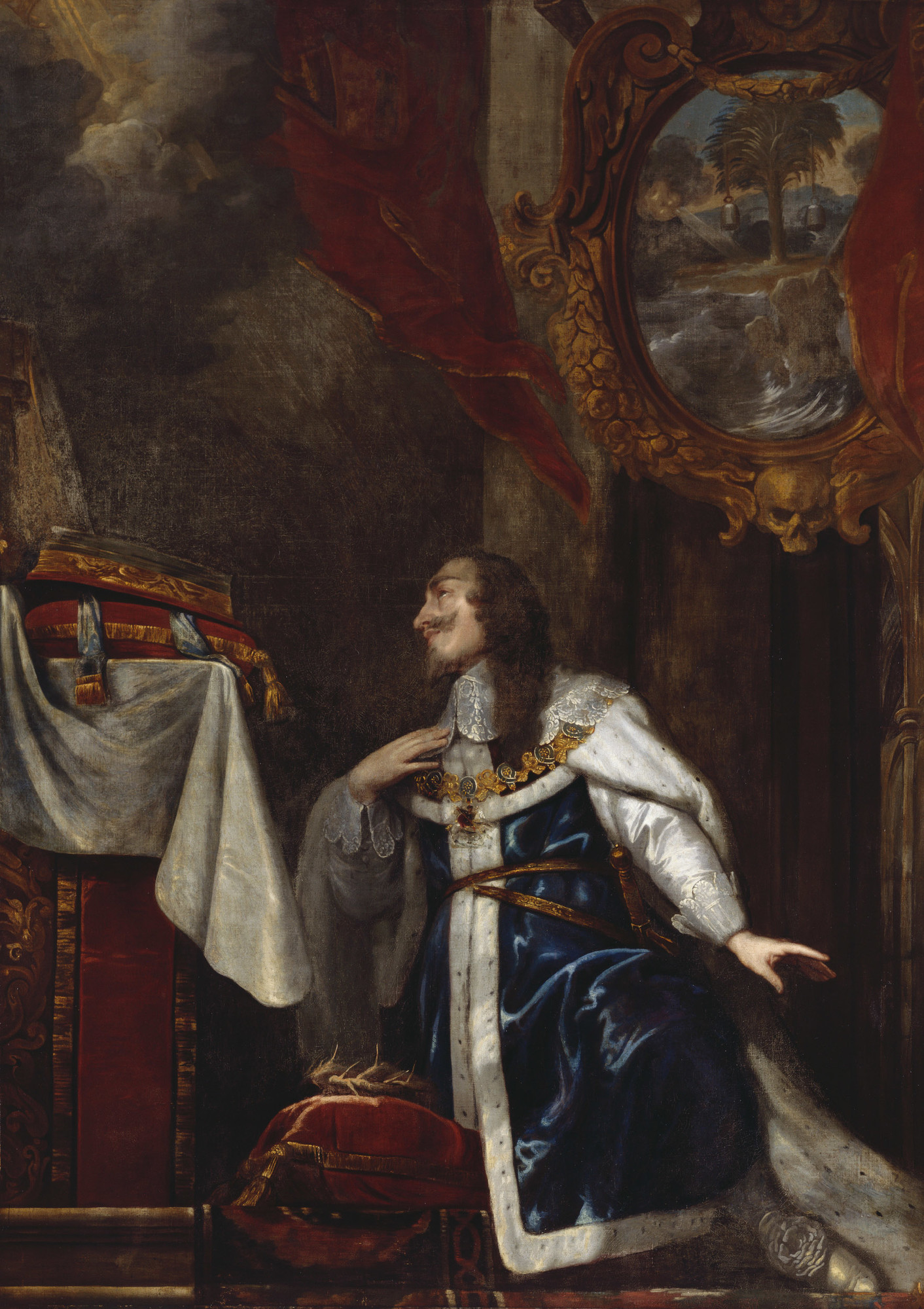
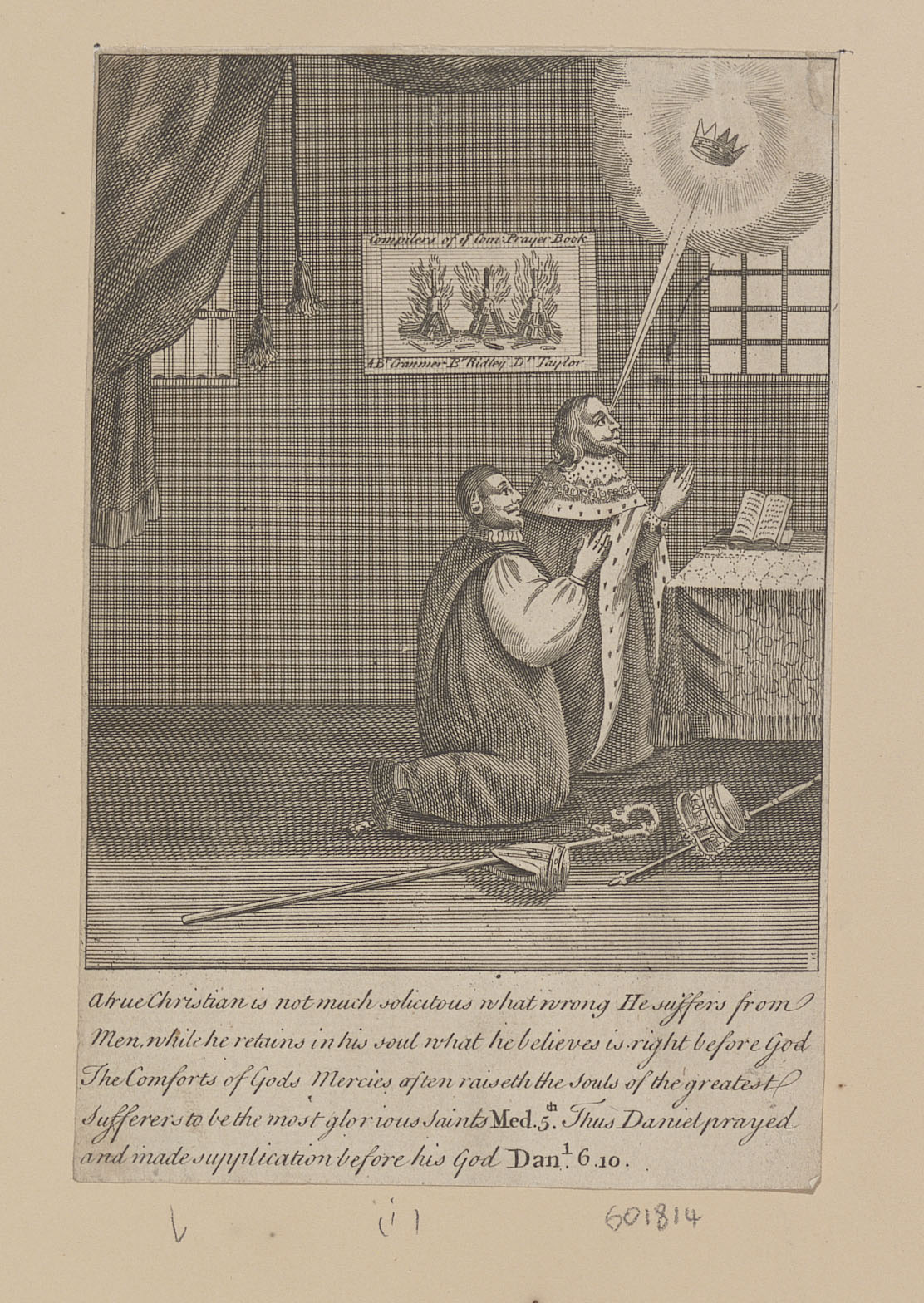
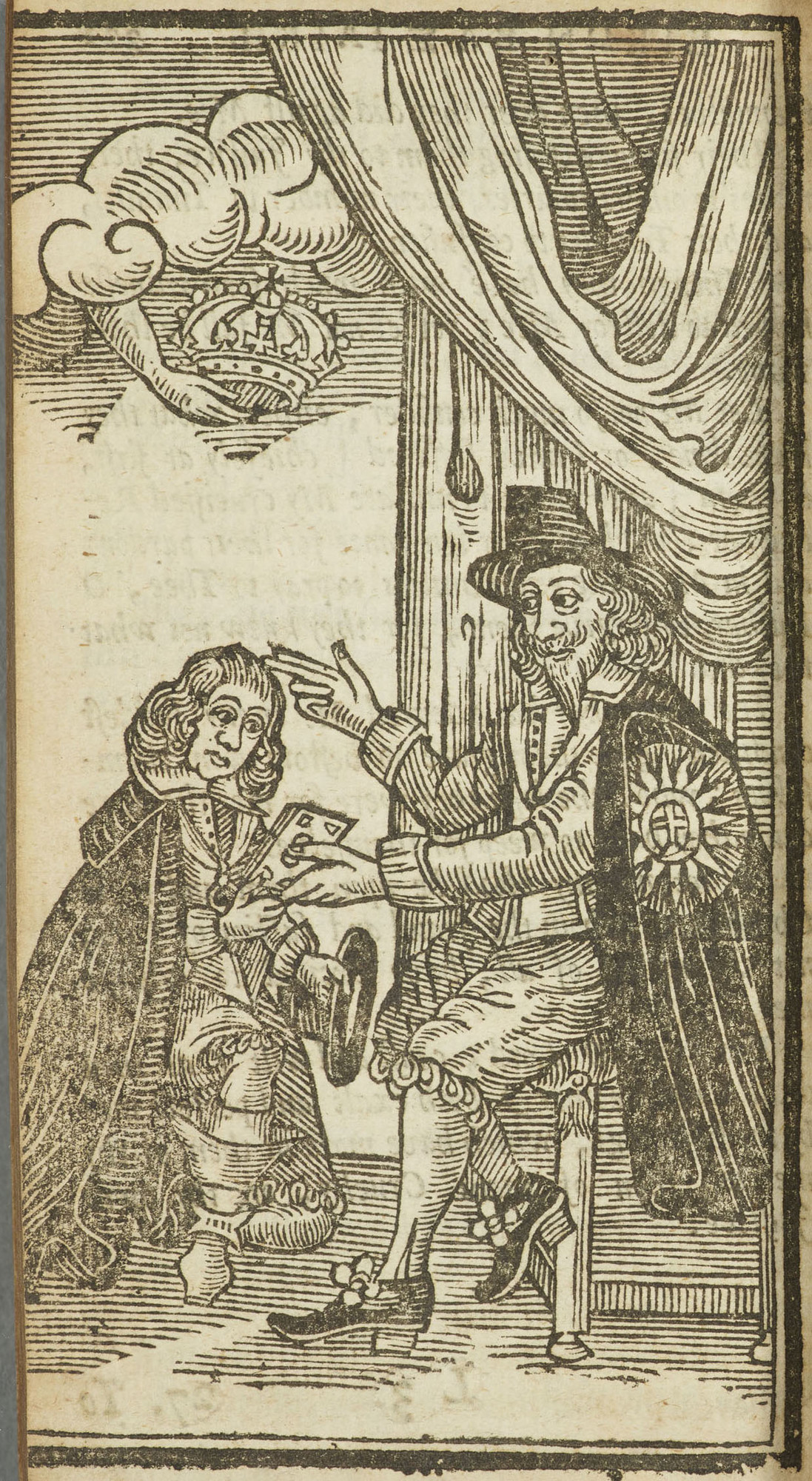
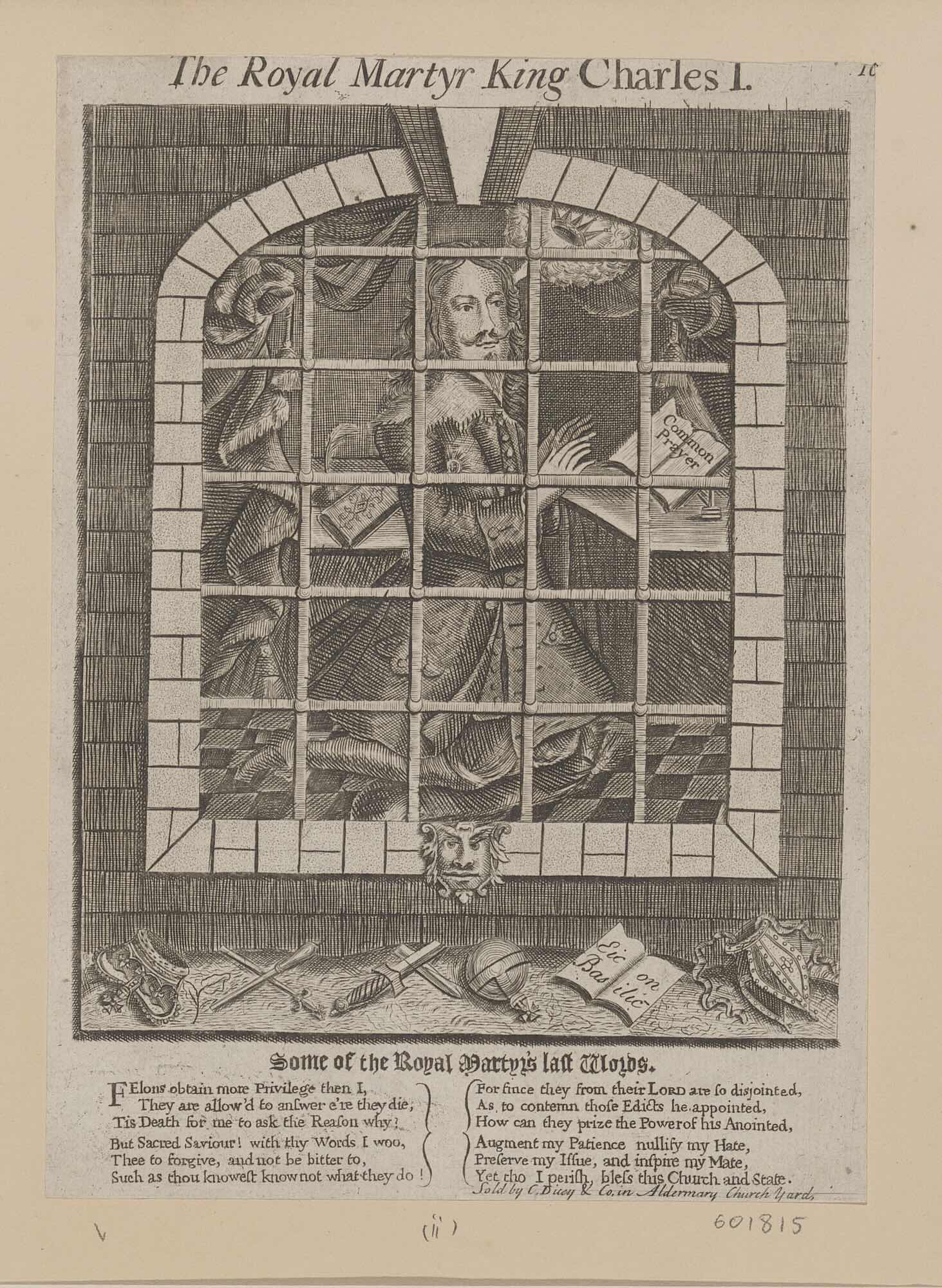
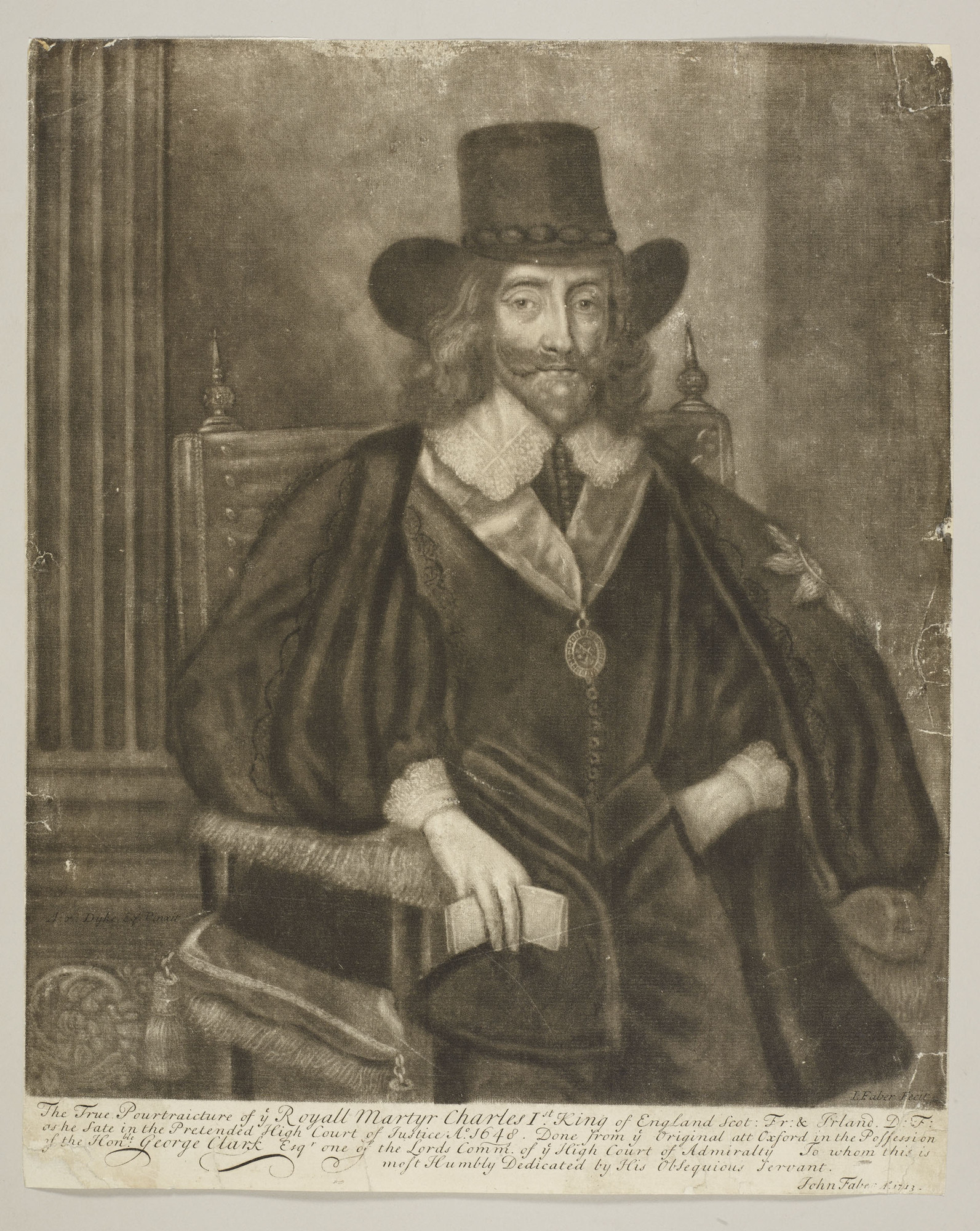
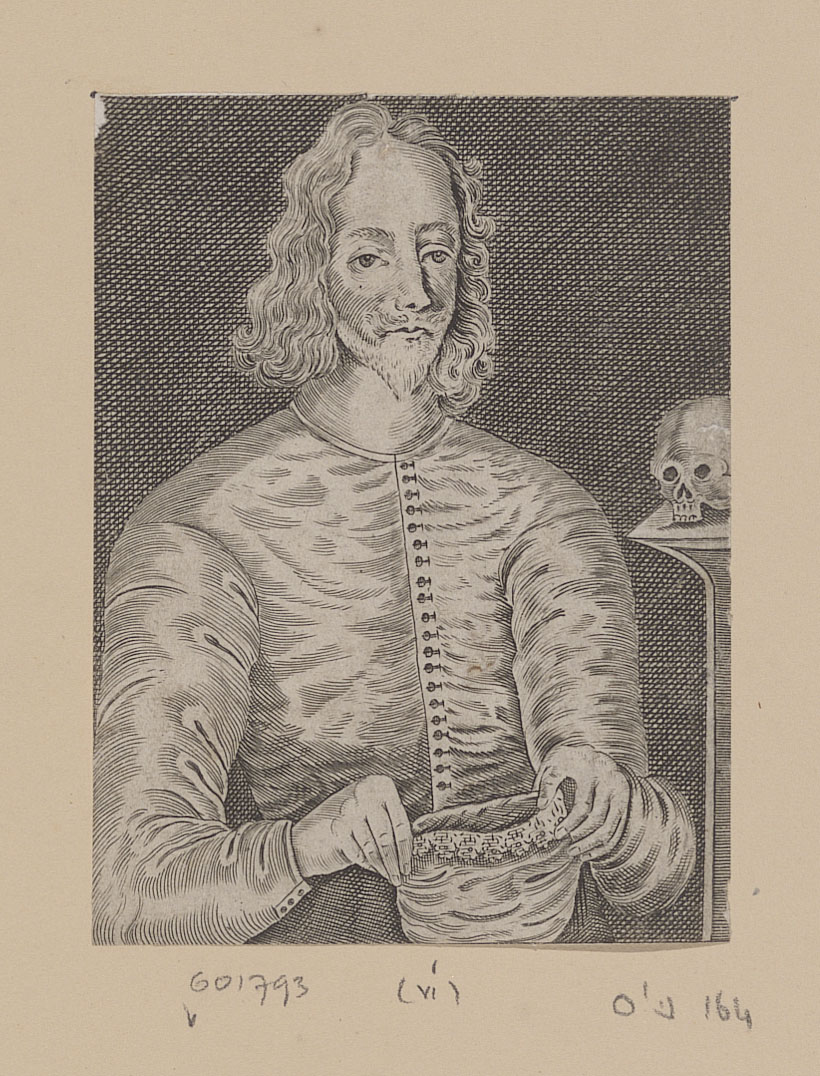
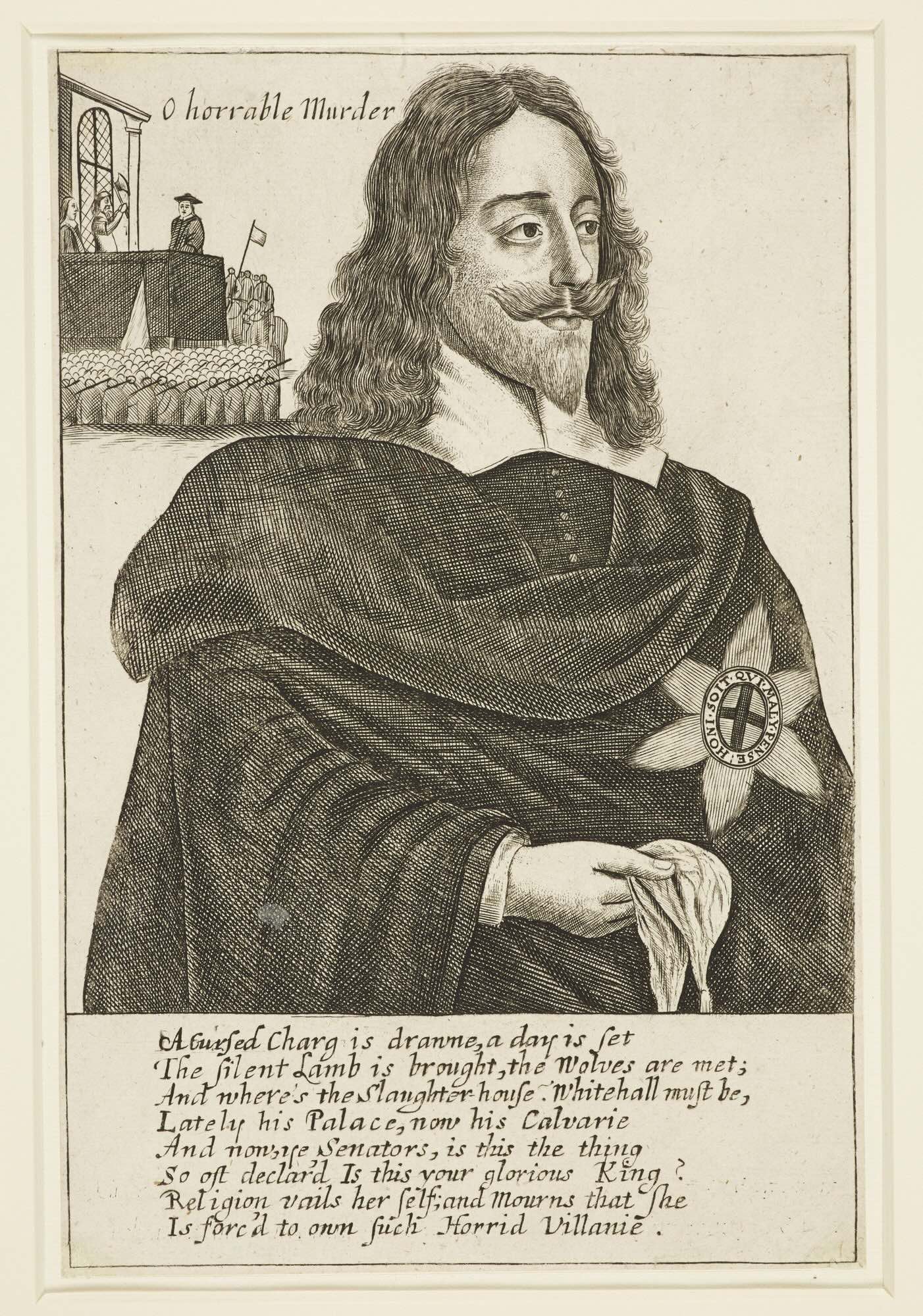
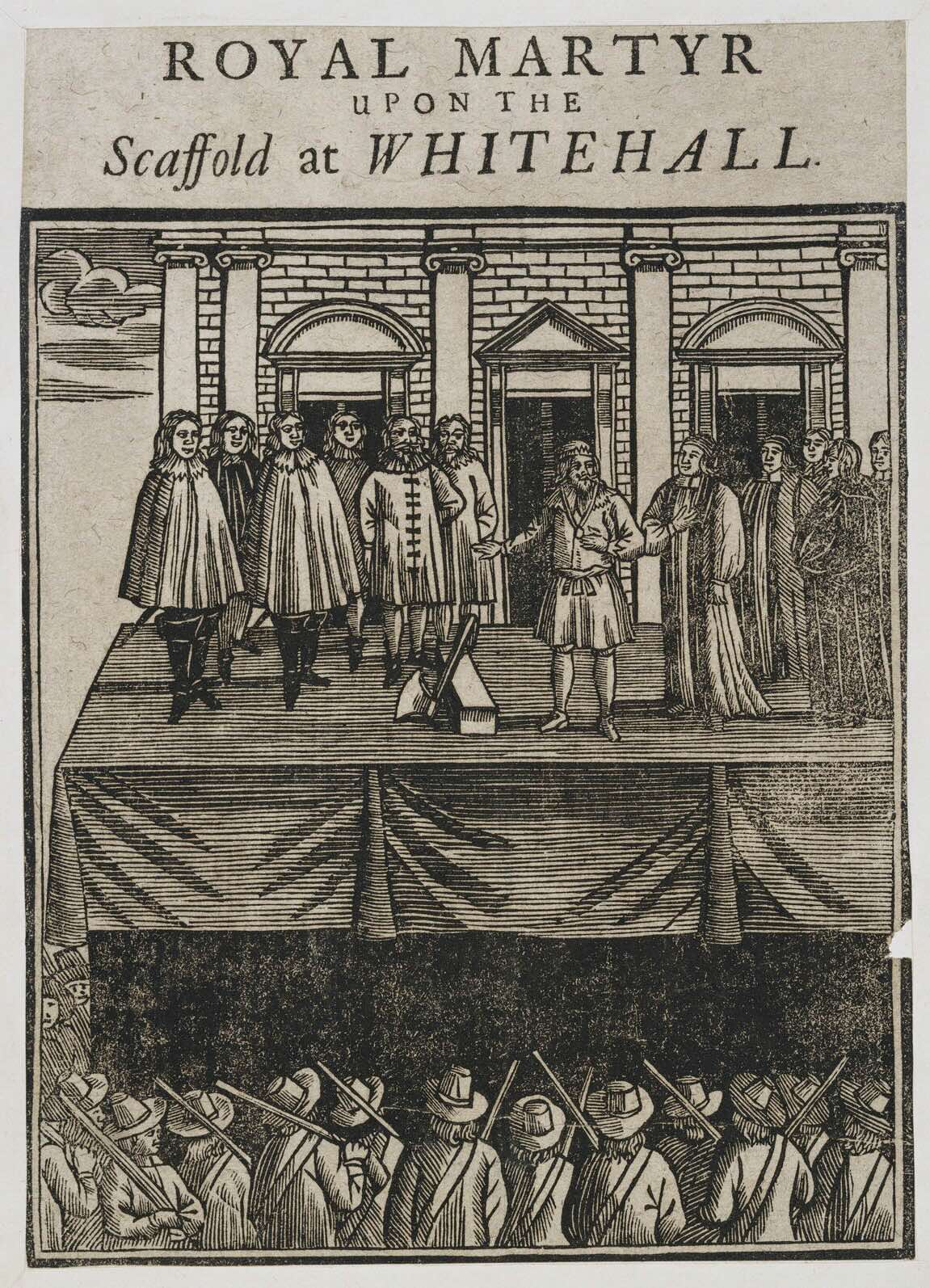
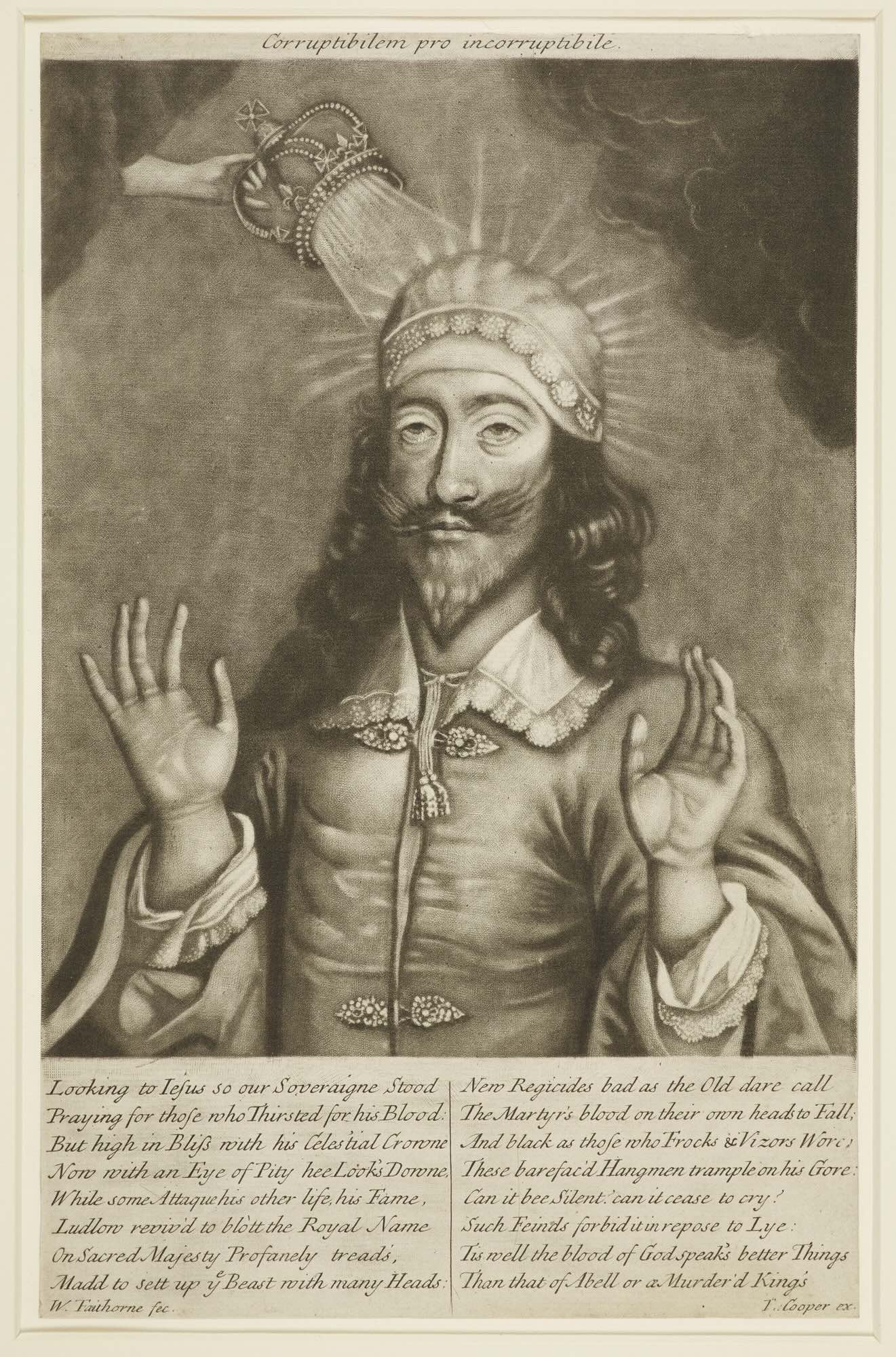
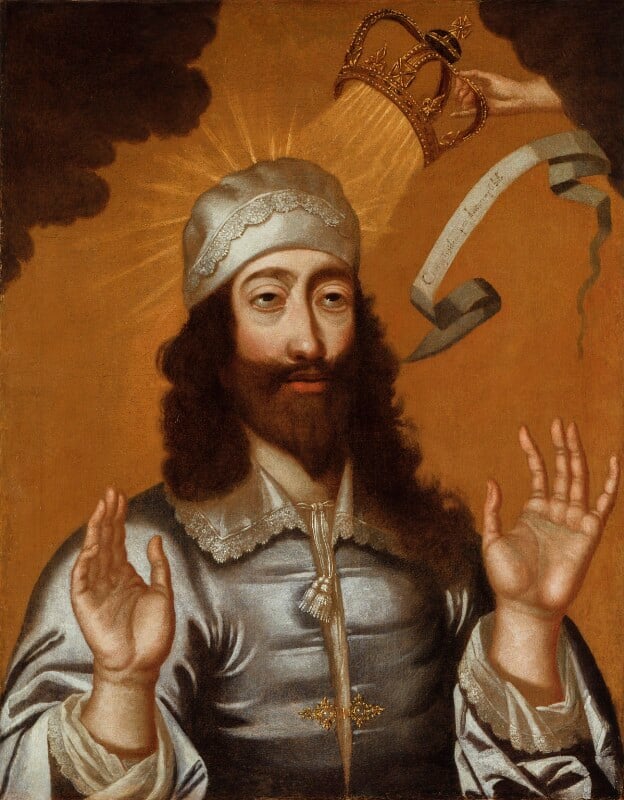
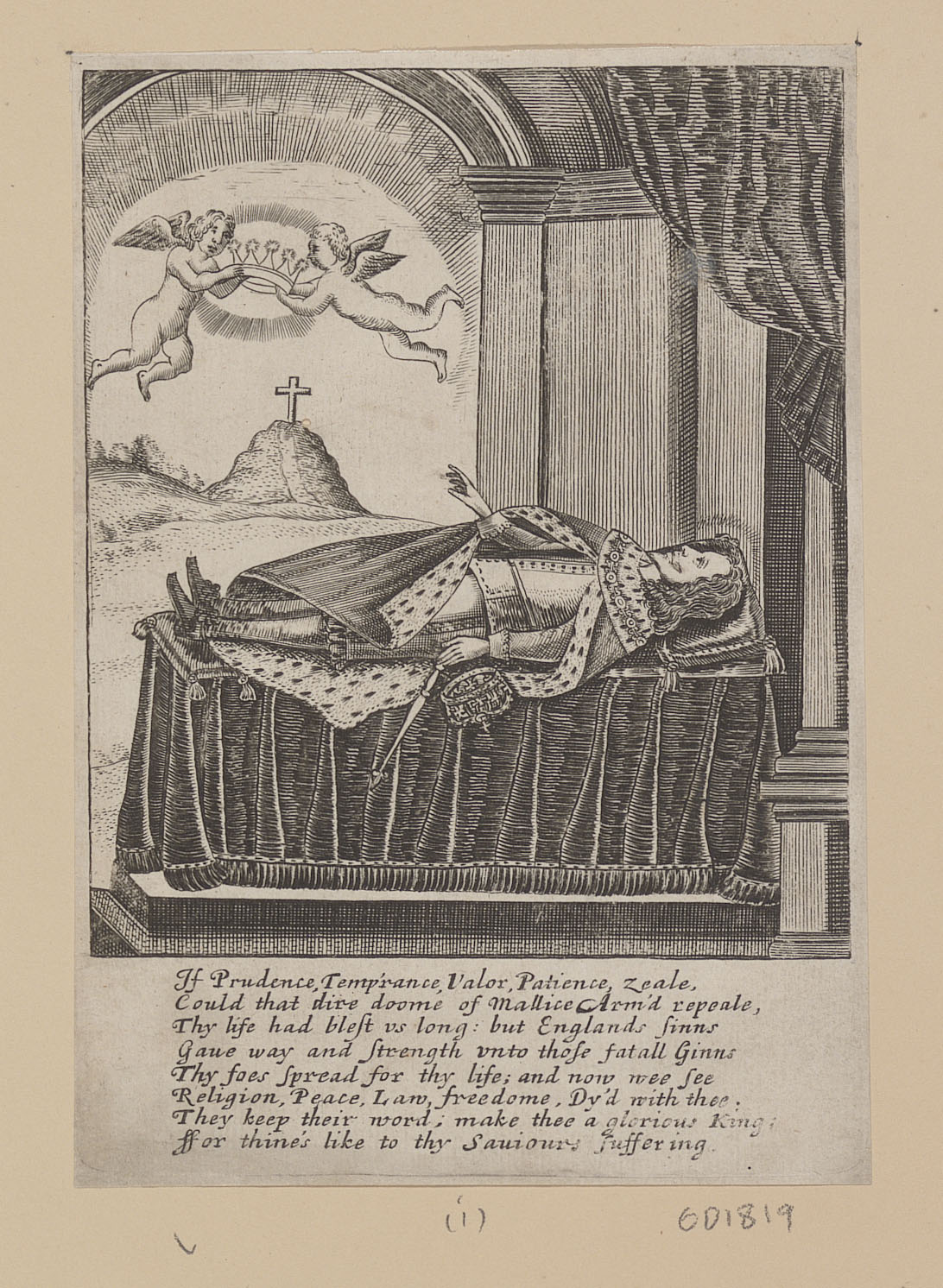
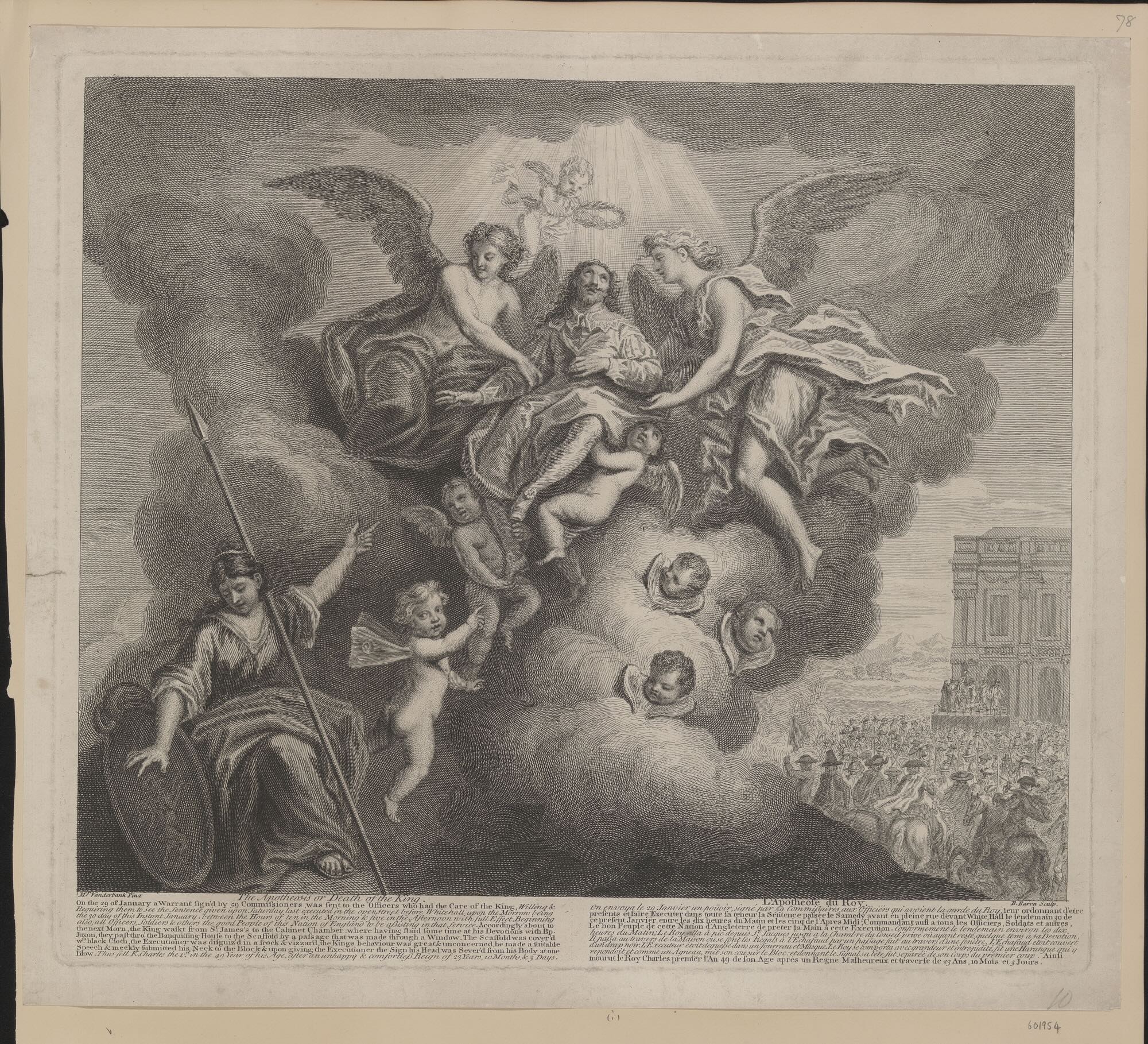
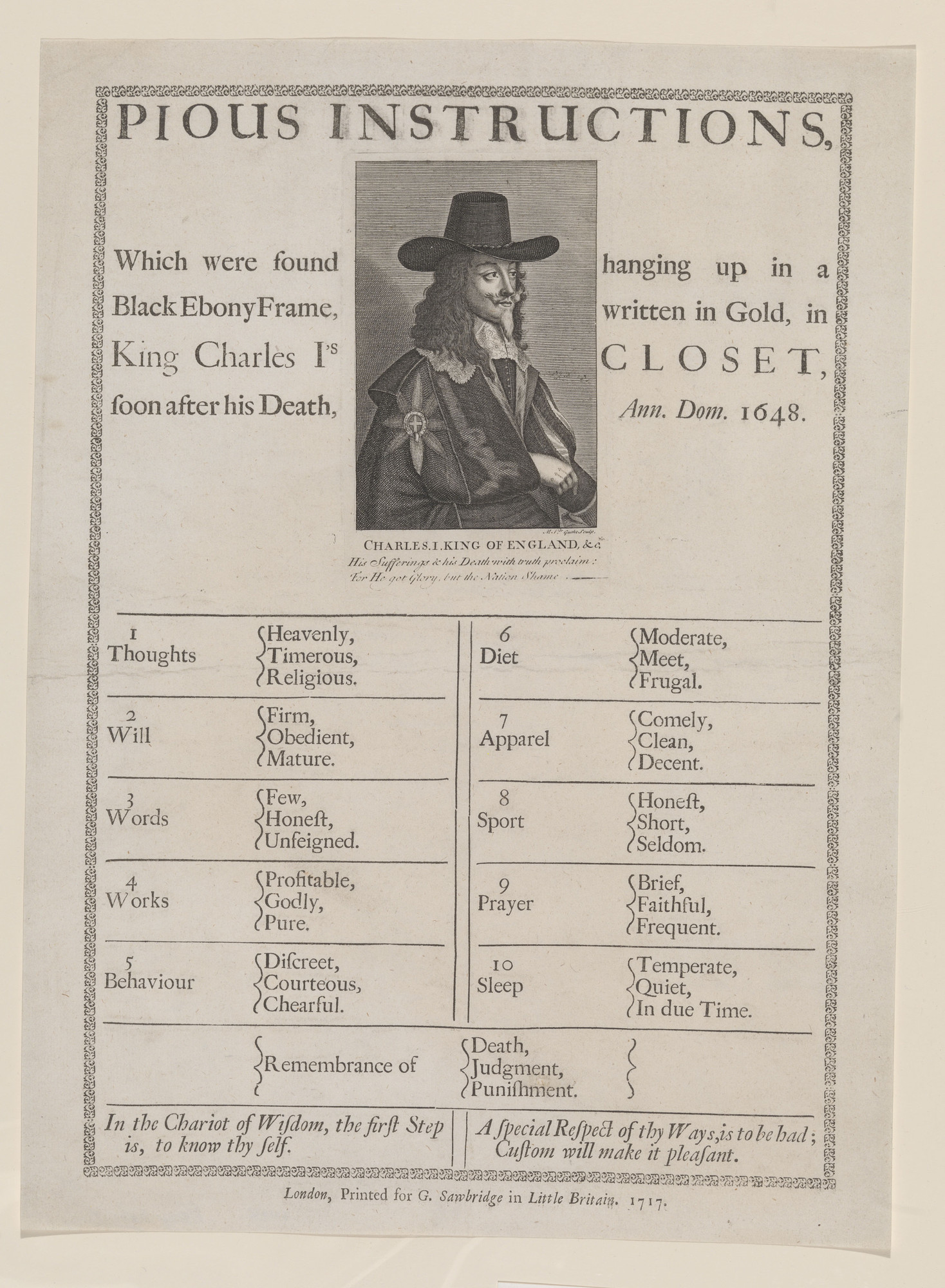
A picture of a Byzantine-style icon of Charles painted on a golden background. Charles looks head-on. He is wearing a purple robe, white lace collar, and blue ribbon. In his right hand he holds a purple and gold crown, and in his left hand he holds a triple-barred cross. Below him is a scroll which reads 'in verbo tuo spes mea'. In the top left of the icon is written 'Carolus I', above which is a crown and below which is the royal coat of arms of the king of England. In the top right is written 'martyr'. A Russian-style icon of Charles over a golden background and surrounded by a darker gold border. Charles looks at the viewer from a slight angle. He is wearing a white gown, a blue ribbon from which hangs his gold George, a lace collar, and a blue cloak on his left shoulder which bears the mark of the Order of the Garter. He holds a red and gold crown in his right hand. He is haloed. In the top right of the image is written 'St. Charles King and Martyr'. A vaguely modern-style icon of Charles over a light blue background and surrounded by a dark gold border. CCharles looks head-on. He is wearing a blue shirt and breeches, a white lace collar, a white ribbon from which hangs his gold George, and a red cloak which is lined with white. In his right hand he holds a church, and in his left hand he holds a scroll which bears some of his last words: 'I have a good cause and a gracious God. I go from a corruptible to an incorruptible crown. Remember!' A crown sits on a pedestal to his left. He is haloed. A haloed angel is coming down from the top-left corner bearing a crown of thorns. Above Charles is written 'Sanctus Carolus'; below him is written 'Defensor Fidei'; left of him is written 'Rex Britanniae'; right of him is written 'et martyr'. This is the same allegorical image that is on the website's home page. Large seventeenth century engraving of King Charles the First in an allegorical scene. He is depicted kneeling before a table with Scripture atop it, grasping a crown of thorns while gazing toward heaven, where he sees another crown. His earthly crown lies on the ground beside his foot, which is shown trampling on a miniature globe. Behind him is an erect palm tree adorned with weights, and behind that is a rocky island standing in the midst of turbulent waves and being blown upon by winds. Most things in the image bear a Latin label. A seventeenth century color painting of Charles that is functionally the same scene as the previous image. Other than the greater detail, the differences are few. The most notable difference is that in this image the heavenly crown toward which Charles looks is almost completely out of frame, suggesting distance. A seventeenth century engraving of Charles and Bishop Juxon kneeling in prayer together. Charles is looking toward a crown in heaven. Beside Bishop Juxon lie a mitre and crosier; beside Charles lie a crown and sceptre. On the wall behind them is a depiction of Cranmer, Ridley, and Taylor being burned at the stake for compiling the first Book of Common Prayer. The image is captioned below with two quotations. The first is 'A true Christian is not much solicitous what wrong He suffers from Men, while he retains in his soul what he believes is right before God. The Comforts of God's Mercies often raiseth the souls of the greatest sufferers to be the most glorious saints' From Med. fifth. The second quotation is from Daniel 6:10: 'Thus Daniel prayed and made supplication before his God.' A seventeenth century engraving depicting King Charles sitting and handing papers or a book to his son Prince Charles, who kneels before him. A hand reaches down from the clouds above holding a crown as if to place it on the Prince's head. A seventeenth-century engraving depicting King Charles in a room behind bars. Charles is kneeling before a table with an open Book of Common Prayer on it and praying. He looks upward toward a heavenly crown. On a table behind him is a book and a quill. On the ground below the window lie a crown, a broken sceptre, a broken sword, a globus criciger, a book labeled 'Eikon Basilike', and a mitre. The image is captioned: a title reads 'Some of the Royal Martyr's last Words'. Below the title is an excerpt of Eikon Basilike set to verse: 'Felons obtain more Priviledge than I, They are allowed to answer ere they die; Tis Death for me to ask the Reason why? But Sacred Saviour! with thy Words I woo, Thee to forgive, and not be bitter to, Such as thou knowest know not what they do! For since they from their Lord are so disjointed, As to condemn those Edicts he appointed, How can they prize the Power of his Anointed, Augment my Patience, nullify my Hate, Preserve my Issue, and inspire my Mate, Yet tho I perish, bless this Church and State.' A mezzotint of Charles sitting in a chair at his trial, which reproduces a 1649 painting by Edward Bower. His facial hair is long, and he wears a hat. The image is captioned: 'The True Portraiture of the Royal Martyr Charles the First, King of England, Scotland, France, and Ireland, Defender of the Faith, as he sat in the Pretended High Court of Justice in the year 1648. Done from the original at Oxford in the Possession of the Honorable George Clark Esquire, one of the Lords Commissioners of the High Court of Admiralty. To whom this is most Humbly Dedicated by his Obsequious Servant, John Fabes.' A seventeenth century engraving of Charles in a button-up gown, holding a night-cap as if about to put it on. Beside him on a pedestal sits a skull. A seventeenth century engraving of Charles looking to the right, draped in his cloak and holding a night-cap in his right hand. In the top left corner of the image is a small depiction of the scaffold surrounded by soldiers, upon which can be seen Bishop Juxon and the headsman with his ax raised. Above the scaffold is written 'O horrible Murder'. The image is captioned below: 'A Cursed Chrge is drawn, a day is set, The silent Lamb is brought, the Wolves are met; And where's the Slughterhouse? Whitehall must be, Lately his Palace, now his Calvary. And now, ye Senators, is this the thing, So oft declared, Is this your glorious King? Religion veils her self; and Mourns that She, Is forced to own such Horrid Villany.' A seventeenth century engraving depicting Charles and others on the scaffold right before he is to be killed. Below the scaffold is surrounded by soldiers, who look on. Charles is looking to Bishop Juxon and motioning to the chopping block. At the top of the image is a title: 'Royal Martyr upon the Scaffold at Whitehall.' A seventeenth century mezzotint of Charles in the gown and nightcap he was killed in. Hcarles holds up his hands and looks upward to heaven, whence a hand extends a crown that shines heavenly rays of light down on his head, off of which the light reflects like a halo. Above the image is the title 'Corruptibilem pro incorruptibile'. Below the image are some verses: 'Looking to Jesus so our Sovereign Stood, Praying for those who Thirsted for his Blood. But high in Bliss with his Celestial Crown, Now with an Eye of Pity he Looks Down. While some Attack his other life, his Fame, Ludlow revived to blot the Royal Name, On Sacred Majesty Profanely treads, Mad to set up the Beast with many Heads: New Regicides bad as the Old dare call, The Martyr's blood on their own heads to Fall; And black as those who Frocks and Visors wore, These barefaced Hangmen trample on his Gore. Can it be Silent? Can it cease to cry? Such Fiends forbid it in rpose to Lie. Tis well the blood of God speaks better Things, Than that of Able or a Murdered King's.' A late seventeenth or early eighteenth century painting that reproduces the previous image in color without title or verses. Now a ribbon extends down toward Charles that faintly reads 'Corruptibilem pro Incorruptibile.' A seventeenth century engraving of the corpse of King Charles lying on a bed and fully clothed in his regalia. A sceptre and crown fall from the King's left hand. In the background is a hill with a path leading up to a cross at its top. Descending from the sky are two cherubs bearing a radiant heavenly crown, and Charles' right hand seems to reach up toward it. There is a faint glow around the King's head. There are verses below the image: 'If Prudence, Temperance, Valor, Patience, Zeal, Could that dire doom of Malice Armed repeal, Thy life had blest us long: but England's sins, Gave way and strength unto those fatal Ginns, Thy foes spread for thy life; and now we see, Religion, Peace, Law, freedom, Died with thee; They keep their word; make thee a glorious King: For thine's like to thy Saviour's suffering.' A seventeenth century engraving depicting the death and apotheosis of Charles. Charles is seen being lifted up by angels to heaven, gazing upward at a cherub who is putting a laurel crown on his head. To the left, the personification of Britannia points at Charles and looks away in shame and sorrow. To the right can distantly be seen the scaffold. There is a very small caption below the image that is written in both English and French. The English caption reads: 'The Apotheosis or Death of the King. On the 29th of January a Warrant signed by 59 Commissioners was sent to the Officers who had the Care of the King, Willing and Requiring them to see the sentence given upon Saturday last executed in the open street before Whitehall upon the Morrow, being the 30 day of this Instant January, between the Hours of ten in the Morning and five in the Afternoon with full Effect. Beginning also, all Officers, Soldiers, and others the good People of this Nation of England to be assisting in that service. Accordingly about in the next Morn, the King walkt from St. James's to the Cabinet Chamber, where having staid some time at his Devotions with Bishop Juxon, they past thro the Banqueting House to the Scaffold by a passage that was made through a Window. The Scaffold was covered with black Cloth, the Executioner was disguised in a frock and vizard, the King's behaviour was great and unconcerned, he made a suitable Speech and meekly submitted his Neck to the Block and upon giving the Executioner the Sign his Head was Severed from his Body at one Blow. Thus fell King Charles the First, in the 49 Year of his Age, after an unhappy and comfortless Reign of 23 years, 10 months, and 3 days.' An eighteenth century engraving titled 'Pious Instructions, Which were found hanging up in a Black Ebony Frame, written in Gold, in King Charles the First's Closet, soon after his Death, Anno Domini 1648.' Dividing the title in two is a reproduction of a Van Dyke painting of Charles, which is captioned 'Charles I King of England etc. His Sufferings and his Death with truth proclaim: For He got Glory, but the Nation Shame.' The instructions are written below and are as follows: '1. Thoughts: heavenly, timerous, religious; 2. Will: firm, obedient, mature; 3. Words: few, honest, unfeigned; 4. Works: profitable, godly, pure; 5. Behaviour: discreet, courteous, cheerful; 6. Diet: moderate, meet, frugal; 7. Apparel: comley, clean, decent; 8. Sport: honest, short, seldom; 9. Prayer: brief, faithful, frequent; 10; Sleep: temperate, wuiet, in due time; Remembrance of: death, judgement, punishment.' Finally, therr are two short aphorisms: 'In the Chariot of Wisdom, the firest Step is, to know thy self.' and 'A special Respect of the Ways is to be had; Custom will make is pleasant.'

Image credits are on the About page.

A fancy divider